
How to check that your ad actually ran in a live stream
Blog/For brands
Advertising on Twitch: how a brand reaches live streams
Viewers avoid ads wherever they can. That is the first thing a brand should know before entering Twitch: the question is not whether you can advertise, but whether anyone will see the ad.
A brand can reach Twitch streams in three ways. Each has its own payment model and its own scale, and each splits the risk differently.
Twitch ads through Amazon Ads
Twitch advertising is sold through Amazon Ads. To advertise, you register with Amazon Ads or talk to Twitch's sales team. The formats fall into two groups: display placements on the home page and across the site, and video. Video ads run inside live streams and, according to Amazon Ads' own guide, can't be skipped. Some high-impact video packages require a minimum spend. Payment is usually per thousand impressions (CPM).
The audience is large: Amazon Ads cites internal Twitch data from 2022: about 35 million daily users worldwide, nearly 70% of them aged 18 to 34.
The weak point is the format itself. An ad break takes the stage away from the streamer: for its duration the ad is the main thing on screen, and the viewer is waiting for it to end (Twitch's Picture-by-Picture ads keep the stream visible during the break).
Sponsorships with streamers
The second route is a deal with a streamer to present your brand: product placement, mentions during the stream, a sponsored segment. For custom projects, Twitch has its own team, Brand Partnership Studio.
With the right streamer this is a strong storytelling tool. But it is hard to scale:
- Every streamer is a separate negotiation, price and script.
- You pay a fixed fee, and nobody guarantees how many people will see the mention.
- The report is usually a screenshot and figures supplied by the creator.
With ten streamers it is manageable. With two hundred, it ties up a whole team for weeks.
In-stream advertising, bought as media
The third route is to place the ad inside the stream and pay per view, not per streamer. That is how APIQ works. The streamer adds an ad layer to their streaming software (OBS, for example) once. Through it, APIQ shows your creative: a banner anywhere on the screen (top, bottom, left or right), full-screen video of up to 30 seconds, one-third-screen video, a poll, rich media, or Stream Takeover, where the stream shrinks and your brand fills the frame. The stream doesn't stop, and the viewer stays with their streamer.
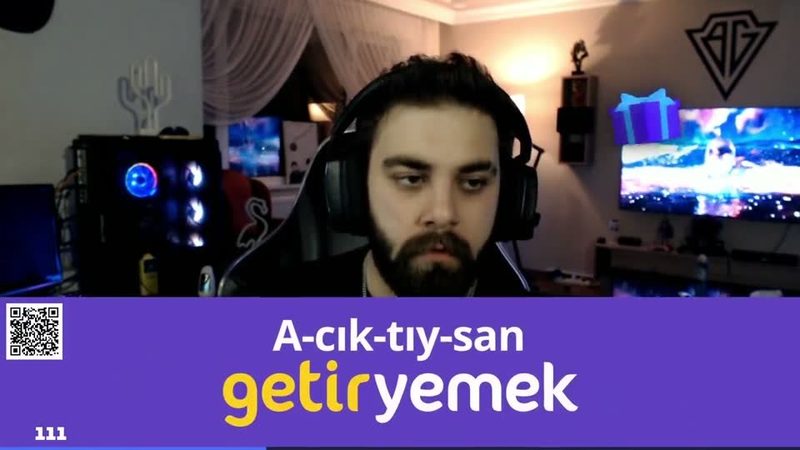
In this model you don't pay the streamer; you pay for verified views:
- One CPV rate for every streamer in the format, fixed in the media plan.
- A guaranteed volume of views: the delivery risk is APIQ's.
- Every view is checked with screenshots and computer vision; suspicious traffic is filtered out using 15 parameters and not billed.
The three routes side by side
| Twitch ads | Streamer sponsorship | In-stream advertising (APIQ) | |
|---|---|---|---|
| How you pay | Usually per thousand impressions (CPM) | Fixed fee per streamer | Per verified view (CPV) |
| Interrupts the stream? | Yes, ad break | No | No |
| View guarantee | You buy impressions, not views | None | Yes |
| Scale | High | As many streamers as you can negotiate with | Hundreds of streamers in one campaign |
| Proof | Platform report | Streamer's report | Screenshot of every view |
They are not mutually exclusive. You can combine them: a deep integration with one or two big creators, with in-stream ads on hundreds of channels adding reach around it. For more on payment models, see CPV, CPM or flat fee.
Results from real campaigns
The figures come from client reports on campaigns run in Turkey:
- L'Oréal Paris, Elseve: 367 streamers, 800,127 verified views, 11,762 clicks, CTR 1.47%.
- Migros Hemen: full-screen video on 203 channels and a link in chat; 300,334 views and CTR 2.01%.
- adidas: a side banner on 243 channels; 322,909 views and CTR 1.89%.
What matters is not how many people the ad was shown to, but whether they actually saw it.
See every campaign on our case studies page.
Want to see a media plan for your brand?
Get a media planHow a campaign launches
- Brief. Goal, dates, country and audience; if you have a TV spot or an online video of up to 30 seconds, send it as is.
- Media plan within 24 hours. A list of recommended streamers, formats and a forecast of views.
- Approval. You strike anyone you don't want off the list; the campaign runs only on the channels you approve.
- Launch in 1–2 days. After the streamer list and creatives are approved.
- Live reporting. Verified views, clicks, QR scans and a screenshot of every view in an online dashboard.
Most clicks don't come from the screen but from chat: on average, about 80% come from the link in chat, 10% from the QR code and 10% from a click on the screen.
Beyond Twitch: Kick, YouTube Live and TikTok Live
Live-stream audiences are not only on Twitch. Kick introduced ad breaks in its streams in August 2026 and, according to its own figures, has passed 100 million active users, 81.7% of its audience aged 18 to 34. APIQ shows advertising in live streams on Twitch, Kick, YouTube Live and TikTok Live; the Mion campaign, for example, ran on Twitch and Kick at the same time. More in Advertising on Kick.
Labeling ads: FTC and ASA rules
If a streamer is paid, the audience has to be able to tell. In the US, the FTC's guide for influencers (November 2019) asks for the disclosure to sit within the video itself, ideally spoken and on screen, and, in live streams, to be repeated periodically so that people who join late still see it. In the UK, the ASA's guidance on labelling ads (March 2023) asks for a prominent label up front, such as “Ad.” The simplest approach is to put an “Ad” label in the creative itself.
Read next